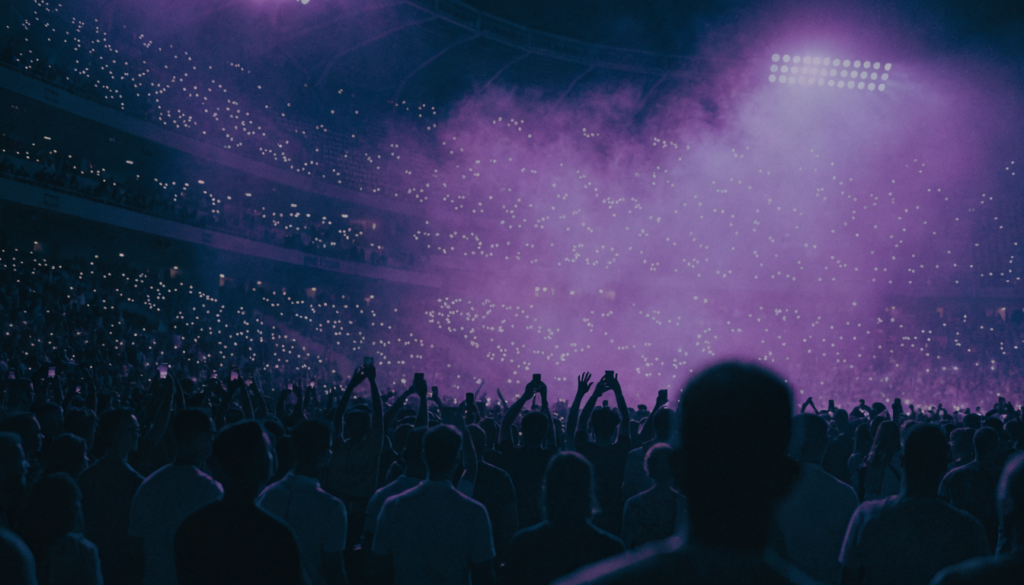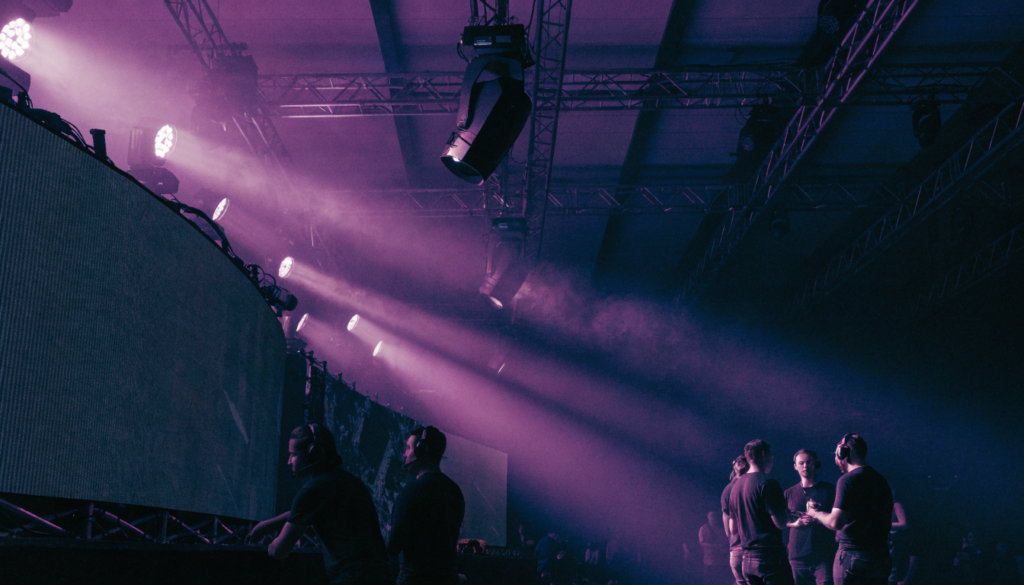
Anyone can book a hall and plug in twelve PCs. Very few can run an esports event where the servers hold, the stream doesn’t stutter, the bracket finishes on time, and sponsors ask when the next one is. The difference isn’t passion — it’s production discipline.
This is the playbook. Esports event organization, from the first spreadsheet to the post-event report.
Phase 1: Define the Event Before You Book Anything
Every failed tournament we’ve seen died in the first two weeks — before a single cable was pulled. The killer is almost always an undefined scope.
Lock these four decisions first:
- Format and title. A 16-team single-elimination CS2 cup is a completely different production than a 128-player fighting game open bracket. The game dictates your hardware, your admin count, and your broadcast length.
- Audience model. Online-only, LAN with live crowd, or hybrid? Each one roughly doubles the production complexity of the previous.
- Revenue logic. Ticket sales, sponsorships, entry fees, merch, or brand-funded marketing activation? Decide now, because it changes everything from venue choice to camera placement.
- The one metric that defines success. Peak concurrent viewers? Attendee NPS? Sponsor lead volume? Pick one primary metric and build backwards from it.
As a rough planning benchmark: a mid-size LAN event (200–500 attendees, broadcast included) typically needs a 10–14 week runway. Compressing that below eight weeks is where budgets start bleeding.
Phase 2: Venue, Network, and the Tech Stack Nobody Sees
Esports has one non-negotiable that concerts and conferences don’t: the network is the show. If ping spikes during a grand final, nothing else you did matters.
The infrastructure checklist
- Dedicated internet lines — separate circuits for tournament traffic, broadcast uplink, and public Wi-Fi. Never share. As a rule of thumb, plan your broadcast uplink at 3–4x your target stream bitrate.
- Power planning — a 100-station LAN floor can pull serious load; get the venue’s electrical schematics early and budget for distribution, not just capacity.
- Redundancy — backup uplink (bonded cellular or a second ISP), UPS on the broadcast rack and tournament servers, spare peripherals at roughly 10% of station count.
- Tournament ops — match servers, admin tooling, anti-cheat, and a bracket system that pushes results to your broadcast graphics automatically. Manual score entry is how overlays end up wrong on stream.
Stage and audience experience
The stage is a TV set that happens to have a crowd. Design it for the camera first: player visibility, caster desk sightlines, LED or projection surfaces that read well on stream, and audio zoning so casters, players, and crowd don’t bleed into each other.
Phase 3: Broadcast Is Half Your Event — Budget Like It
Here’s the number most first-time organizers get wrong: for a broadcast-led esports event, expect 30–50% of your total budget to sit in the broadcast and production line. That’s not overhead. For sponsors and remote audiences, the stream is the event.
A production-grade esports broadcast typically includes:
- Multi-camera coverage — player cams, caster desk, crowd, and stage wides; 4–6 cameras is a realistic floor for a professional look.
- Observer team — dedicated in-game camera operators who know the title. This is the most underrated hire in esports; a great observer is the difference between a match and a story.
- Graphics package — overlays, lower thirds, sponsor integrations, stats, and transitions built before rehearsal week, not during it.
- Talent — casters, a desk host, and an interviewer. Book them early; good talent calendars fill months out.
- Distribution — simultaneous output to Twitch, YouTube, and any sponsor or federation platforms, with per-platform encoding.
Run a full dress rehearsal 48 hours out: complete show flow, real graphics, real talent, simulated match. Estimated payoff: rehearsals typically surface 15–20 fixable issues that would otherwise have happened live.
Phase 4: Sponsors, Content, and the Money Layer
Sponsors don’t buy logo placement; they buy audience moments. Build sponsorship inventory into the show design: branded replay segments, MVP awards, halftime content blocks, product integrations at player stations, and clip-ready moments engineered for social.
Then package the proof. Sponsors renew based on numbers, so instrument everything: concurrent and unique viewers, watch time, social reach, on-site engagement, and lead capture where relevant. If sponsorship is core to your model, it deserves its own strategy — we’ve broken that down separately in our guide to esports sponsorship.
Phase 5: Event Week and the 72 Hours After
Event week is execution, not improvisation. You need a minute-by-minute show flow, a single point of authority (show caller), clear escalation paths for tech failures, and a communications channel structure that separates broadcast, tournament ops, and venue teams.
Then — and this is where most organizers stop too early — the 72 hours after the event decide whether it was a one-off or a franchise:
- Publish highlight clips within 24 hours, while the audience is still emotionally invested.
- Deliver the sponsor report within a week: metrics, screenshots, media value, and a renewal proposal.
- Run the internal debrief while memories are fresh. Every event should make the next one 20% smoother.
How Venture CO Group Helps
This entire playbook is what Venture CO Group does end to end. Since 2019 we’ve been producing esports events with full backend support — tournament operations, network infrastructure, staging, multi-camera broadcast, streaming, talent coordination, and sponsor activation — across the EU, UK, US, Turkey, and Uzbekistan. Because our group also runs IT services, marketing, and motion picture production in-house, you’re not stitching together five vendors and hoping the seams hold. One team, one accountability line, one show.
Whether you’re a brand testing esports for the first time, a federation scaling a league, or an organizer who needs a production partner who won’t blink under live pressure — we’ve built for all three.
Ready to Build Your Event?
The best esports events look effortless because someone sweated every detail months earlier. Let that someone be us.
Tell us about your event → https://ventureco.group/enquiry/