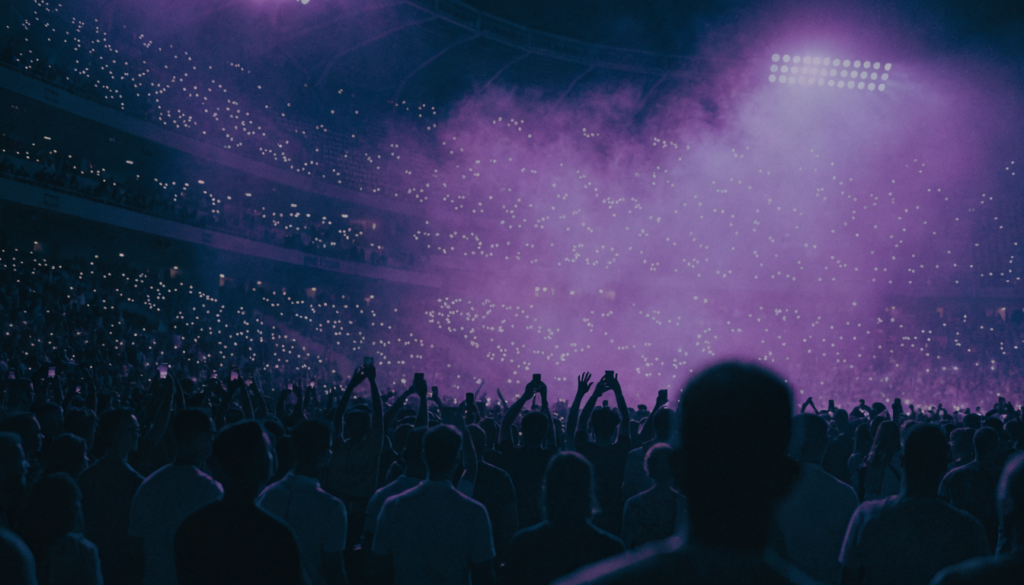
Your target customer skips your pre-roll ad in five seconds, pays for premium to avoid the rest, and hasn’t watched linear TV since secondary school. But they’ll sit through a four-hour esports broadcast — voluntarily, attentively, and with the chat window open.
That’s not a media problem. That’s a media opportunity. And esports sponsorship is how brands walk through the door instead of shouting through the wall.
Why Esports Audiences Are Different — and Why It Matters to Brands
The global esports audience is estimated at over half a billion people, and the demographic core sits exactly where most brands are struggling: roughly ages 16–34, digital-native, ad-resistant, and community-driven.
Three characteristics make this audience uniquely valuable for sponsors:
- Attention density. Esports viewers don’t have the broadcast on in the background while cooking. They’re watching plays, following the bracket, and arguing in chat. Industry estimates consistently put average esports viewing sessions well above typical social video engagement times — often an hour or more per session.
- Community trust transfer. Gen Z famously distrusts advertising but trusts scenes. A brand that shows up correctly inside a community they care about borrows credibility no media buy can purchase.
- Endemic openness. Esports fans expect sponsors — teams and events literally can’t exist without them — so well-executed sponsorship is read as support, not intrusion. That’s a psychological head start most channels never give you.
The catch: “well-executed” is doing heavy lifting in that sentence. Esports audiences reward brands that contribute and are quick to identify the ones just renting a logo slot.
What Esports Sponsorship Actually Looks Like in 2026
Forget the single mental image of a logo on a jersey. Modern esports sponsorship is a menu, and smart brands mix formats:
Event and tournament sponsorship
Title or presenting rights on a tournament, stage branding, broadcast integrations, and on-site activations. This is the fastest route in for non-endemic brands because the event organizer handles the community credibility — you plug into an existing moment.
Broadcast-native integrations
Sponsored replays, MVP awards, stat segments, halftime shows, and caster reads. These live inside the content, which means they can’t be skipped and — done well — don’t need to be. A “Play of the Match presented by…” segment is watched, clipped, and reshared.
Team and talent partnerships
Jersey placement, content collaborations, and creator campaigns with players or casters. Higher trust, but higher due diligence — you’re tying your brand to people.
Grassroots and community programs
University leagues, amateur circuits, and open qualifiers. Lower cost per activation, extremely high goodwill, and a long-term brand-building play that endemic brands have used quietly for years.
As a planning guide: entry-level regional event sponsorships can start in the low five figures (EUR/USD), while title sponsorship of a mid-size international event typically runs into six. The strategic question isn’t “what does it cost” — it’s “what moment do we own.”
The ROI Question: How to Measure More Than Logo Time
The brands that churn out of esports after one season almost always made the same mistake: they measured esports sponsorship like a stadium billboard. Impressions alone undersell what you bought.
Build your measurement stack in three layers:
- Reach metrics — peak and average concurrent viewers, unique viewers, hours watched, and social impressions. Table stakes; every professional event partner should deliver these in a post-event report.
- Engagement metrics — chat mentions, clip shares, branded segment completion, hashtag usage, on-site activation participation, and sentiment. This is where esports outperforms traditional sport sponsorship, and where most reports go silent. Demand this layer.
- Conversion metrics — promo code redemptions, QR scans from broadcast graphics, landing page traffic during the event window, lead capture at booths, and post-event brand lift surveys. Set these up before the event; they can’t be reconstructed after.
One structural advantage worth stating plainly: because esports is broadcast-first and digital-native, everything is measurable in ways stadium sponsorship never was. If your event partner can’t instrument the funnel, that’s a partner problem, not an esports problem.
The Three Mistakes That Burn Sponsorship Budgets
- Renting the logo, skipping the activation. A logo without a moment is wallpaper. Budget rule of thumb from the wider sponsorship industry: plan to spend roughly as much on activation as on the rights themselves.
- Talking like a marketing deck. Esports audiences have world-class inauthenticity radar. You don’t need to speak gamer — you need to not pretend to. Respect beats mimicry every time.
- One-and-done timing. Communities reward consistency. A brand present across a season builds recognition and trust that a single splashy final never will. Plan sponsorship in arcs, not events.
If you’re considering going deeper than sponsoring — actually organizing your own branded tournament — we’ve written a full production guide on how to organize an esports event.
How Venture CO Group Helps
Venture CO Group sits on both sides of this equation, which is rare. We produce esports events end to end — staging, tournament operations, multi-camera broadcast, streaming — and we’re a marketing and PR house. That means we don’t just sell you a sponsorship slot; we design the activation, build the broadcast integrations, produce the content, and deliver the measurement report that justifies the renewal.
Since 2019, we’ve been building esports productions and brand programs across the EU, UK, US, Turkey, and Uzbekistan — for brands entering gaming for the first time and for partners who’ve been here for years and want sharper ROI.
Own a Moment, Not a Logo Slot
Gen Z’s attention isn’t for sale — but it is available to brands that show up right. Let’s design your entry.
Start the conversation → https://ventureco.group/enquiry/