Every January, the same ritual: fifty “trends” articles, forty-eight of which are recycled buzzwords with a fresh coat of paint. Meanwhile, your CFO is asking one question — which of these actually turns into revenue?
Fair question. So let’s skip the hype cycle and talk about the B2B marketing trends 2026 that have a direct, traceable line to pipeline. Not vibes. Pipeline.
1. The Dark Funnel Is Now Most of the Funnel
Here’s the uncomfortable truth most attribution dashboards hide: the majority of a B2B buying decision happens where you can’t see it. Slack communities, group chats, podcast episodes, a colleague’s offhand recommendation, a demo video someone watched three times at 11 p.m.
Industry research has consistently suggested that buyers are well past the halfway point of their decision before they ever fill out a form — many estimates put it around two-thirds of the journey. If your entire strategy is optimized for the last visible click, you’re marketing to the final 30% of a decision that’s already been shaped.
What to do about it in 2026:
- Invest in being present where decisions form: expert content, video, communities, events — even when the ROI isn’t instantly measurable.
- Add a simple “How did you hear about us?” free-text field to every form. It’s a low-tech dark-funnel flashlight, and the answers will humble your attribution model.
- Treat brand and demand as one budget line, not rivals fighting over scraps.
2. AI Content Flooded the Market — Which Made Human Judgment Expensive Again
Generative AI made producing content nearly free. Predictably, everyone did. The result: an ocean of technically-correct, spiritually-empty blog posts that all sound like the same intern.
This is genuinely good news for anyone willing to do the work. When average content is free, distinctive content is the differentiator. In 2026, the winning formula isn’t “AI vs. human” — it’s AI for speed, humans for stance. Strong opinions, real expertise, named authors, actual data points, a recognizable voice.
The practical checklist
- Every major asset should contain at least one thing a competitor couldn’t credibly say.
- Kill the anonymous corporate byline. Buyers trust people, not logos.
- Repurpose ruthlessly: one strong keynote or expert interview can become 15+ assets — clips, posts, an article, a lead magnet.
3. Video Isn’t a Channel Anymore. It’s the Default Language.
Gen Z and Millennial buyers now hold the budget in a growing share of B2B accounts — and they research vendors the way they research everything else: they watch. Product walkthroughs, founder takes, event recaps, short-form explainers.
Text still matters for search and depth. But in 2026, a B2B brand with no video presence reads the way a brand with no website read in 2010: technically possible, practically disqualifying. Companies producing consistent video content routinely report stronger engagement and faster deal velocity than text-only peers — and even conservative estimates put video among the highest-retention formats available to marketers.
The bar isn’t Hollywood. The bar is consistent, credible, and native to the platform. (We went deep on this in our companion piece on video-first marketing — worth reading next.)
4. Events Are Back — But Only the Ones Built Like Media Products
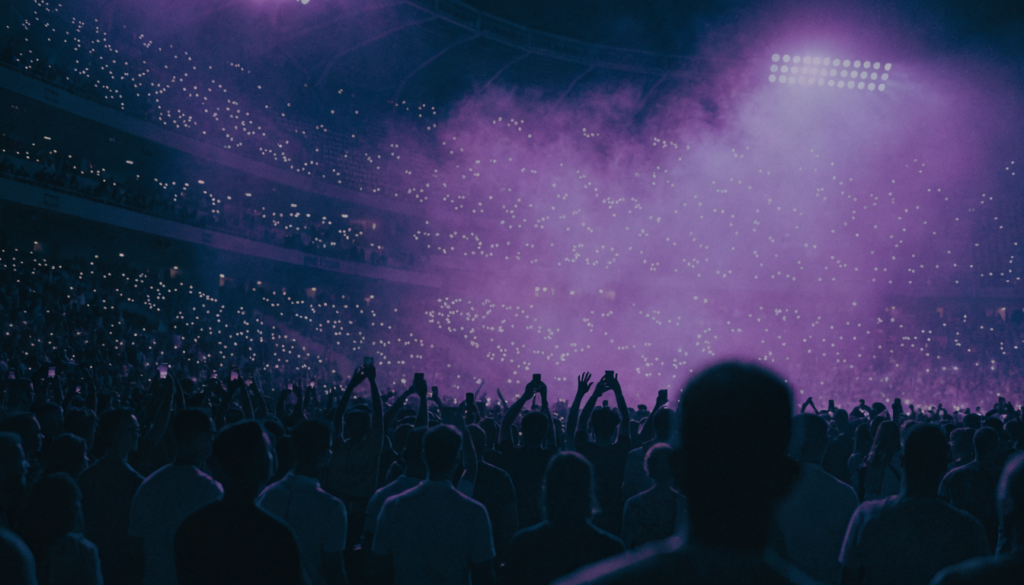
The post-pandemic event rebound taught everyone a lesson: nobody misses beige conference rooms and stale sandwiches. What works in 2026 is the event-as-content-engine model — gatherings designed from day one to be filmed, streamed, clipped, and redistributed for months.
Esports and creator culture quietly wrote the playbook here: production value, live audience energy, and a content tail that outlasts the event itself by an order of magnitude. Smart B2B teams are stealing that playbook wholesale. One well-produced flagship event can realistically feed a quarter’s worth of content calendar — if it’s captured properly. If it isn’t, the moment evaporates the second the lights go down.
5. Marketing and Sales Are Finally Merging Into One Revenue Motion
The most important 2026 trend isn’t a tactic. It’s structural. The wall between “marketing generates leads” and “sales closes them” is collapsing, because buyers never respected that wall in the first place.
The teams outperforming their markets run a single revenue motion: shared metrics (pipeline and revenue, not MQLs), shared content (sales uses marketing assets in sequences daily), and shared accountability. Some go further and outsource the entire commercial engine — content, demand gen, and the sales function itself — to one accountable partner instead of stitching together five agencies and an SDR vendor who’ve never spoken to each other.
That model has a name — a saleshouse — and it’s one of the fastest-growing answers to the “we have leads but no closers” problem.
How Venture CO Group Helps
This is the part where most agencies would pitch you a slide deck. We’ll keep it shorter.
Venture CO Group is a multidisciplinary group — marketing and PR, design, video and streaming production, event production, IT, and a full outsourced saleshouse — operating across the EU, UK, US, Turkey, and Uzbekistan since 2019. Which means the trends above aren’t things we write about; they’re things we build for clients every week, under one roof, with one team accountable for the outcome.
Strategy without execution is a poster. We do both.
The Bottom Line
2026 rewards B2B teams that respect the dark funnel, sound like humans, speak in video, treat events as media products, and run marketing and sales as one revenue engine. Everything else is decoration.
Want a pipeline audit instead of another trends deck? Talk to Venture CO Group →